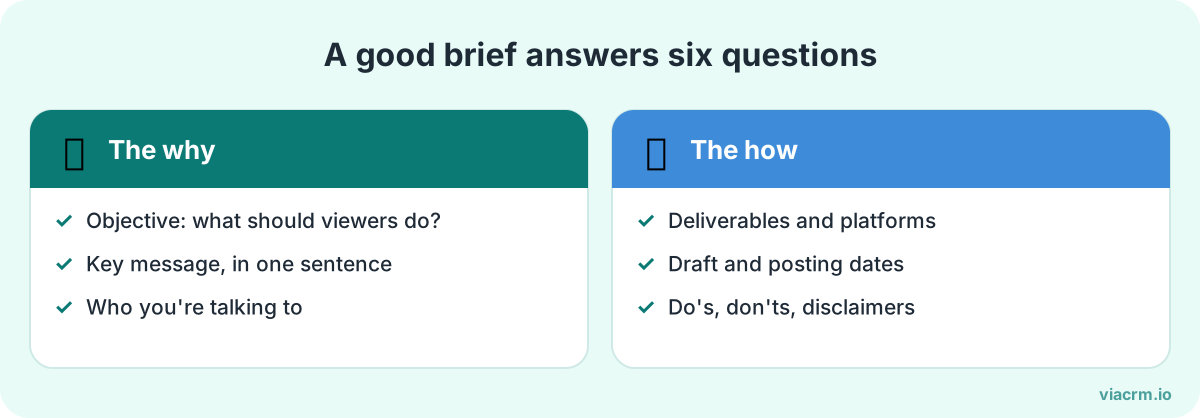
A good influencer brief tells the creator what you want to achieve, exactly what to deliver and by when, what they must and mustn't say, and what success looks like, all on one or two pages. Keep the rules clear and leave room for the creator's own style, because that's why their audience follows them.
Below is a free template you can copy, followed by do's and don'ts, how to handle restricted keywords and disclaimers, and how to use sample content without getting copies of it.
Why the brief decides the campaign
Most rejected drafts aren't the creator's fault. They come from briefs that were vague ("make it fun and authentic"), too long to read on a phone, or missing a detail that only came up at approval, such as a price that must not be mentioned.
A clear brief means fewer revision rounds, faster approvals and content that looks like it belongs on the creator's feed. It also gives everyone a shared reference when feedback is needed later: "see line 6 of the brief" settles most disagreements.
The free influencer brief template
If a creator can't answer these after reading your brief, it isn't finished.
Copy this table into your document of choice and fill in the right-hand column. Delete rows you don't need.
Section
What to write
Example
Campaign name
Short internal name
Glow Serum launch, November
About the brand
Two or three sentences in plain language
Local skincare brand making gentle products for humid weather
Objective
One main goal
Awareness of the new serum among women aged 20 to 35
Key messages
Two or three points, in order of importance
Lightweight, suitable for oily skin, made in Malaysia
Deliverables
Platform, format, number, length
1 TikTok video (30 to 60 seconds) + 3 Instagram Stories
Draft date
When the first draft is due
5 November, 6pm
Posting date and window
When it goes live and how long it stays up
12 November, 8pm to 10pm; keep live for at least 60 days
Do's
What you'd love to see
Show the texture on your skin; share your real routine
Don'ts
What to avoid
No before-and-after claims; don't show competitor products
Restricted keywords
Words and names that must not appear
cure, whitening, permanent, competitor names
Must include
Handles, hashtags, links, codes
@brandhandle, #GlowSerum, code GLOW10
Disclaimers and disclosure
Required wording and paid-partnership label
Use the platform's paid-partnership label and say it's sponsored
Sample content
Links to examples for direction, not copying
Two past videos we liked and why
Approval process
Who reviews, turnaround times, rounds
Agency 1 day, client 2 days, up to 2 rounds
Usage rights
Where and how long the brand can reuse the content
Brand organic social for 3 months; no paid ads without agreement
Fee and payment
Amount, what triggers payment, payment date
RM 800; paid within 14 days of posting
Contact
One person for questions
Name and WhatsApp number of the account manager
Keep the finished brief to one or two pages. Creators read briefs on their phones between shoots.
How to fill it in, step by step
Start with one objective. Awareness, consideration or sales. Trying to do all three in one 30-second video rarely works.
Limit key messages to three. If everything is important, nothing is.
Be exact about deliverables. "1 TikTok video, 30 to 60 seconds, vertical, with captions" beats "some TikTok content".
Work backwards from the posting date. Allow time for two rounds of review before the draft date.
Write the don'ts with your client or legal team before sending, not after the first draft.
Read it on your phone. If you're scrolling for ages, cut it down.
Do's and don'ts for writing the brief
Do
Explain the why behind each rule, so creators can make good choices on their own.
Give creative freedom on the hook, storyline and setting.
Use plain language. Some creators may read the brief in their second or third language, so consider a Bahasa Malaysia or Chinese version for local campaigns.
Name one contact person for questions.
Send product early enough for the creator to actually use it.
Don't
Write a script, unless you truly need one. Scripted posts usually sound like ads.
Hide important rules on page five.
Change the brief after drafts arrive without resetting the timeline.
Ask for claims the brand can't back up.
Copy and paste the same brief for TikTok, Instagram and RED. Each platform has its own style.
Restricted keywords, disclaimers and disclosure
Restricted keywords are words that must not appear in the caption, on screen or in the voiceover. Common examples are competitor names, medical words like "cure" or "treat" for non-medical products, absolute claims like "best" or "100% guaranteed", and price mentions when prices differ by outlet. List them clearly; creators can't avoid words they don't know about.
Disclaimers are wording that must appear, such as "T&Cs apply" for a promotion, or permit details required for certain regulated products. Give the exact text so it's copied correctly.
Disclosure means making clear the post is paid. Malaysia's Content Code 2022 extended its advertising provisions to social media influencers and expects paid endorsements to be clearly disclosed. Tell creators exactly how you want it done, for example the platform's paid-partnership label plus a clear mention in the caption. For health, supplements, financial and other regulated products, check the rules and take advice before briefing.
Sample content: direction, not a copy
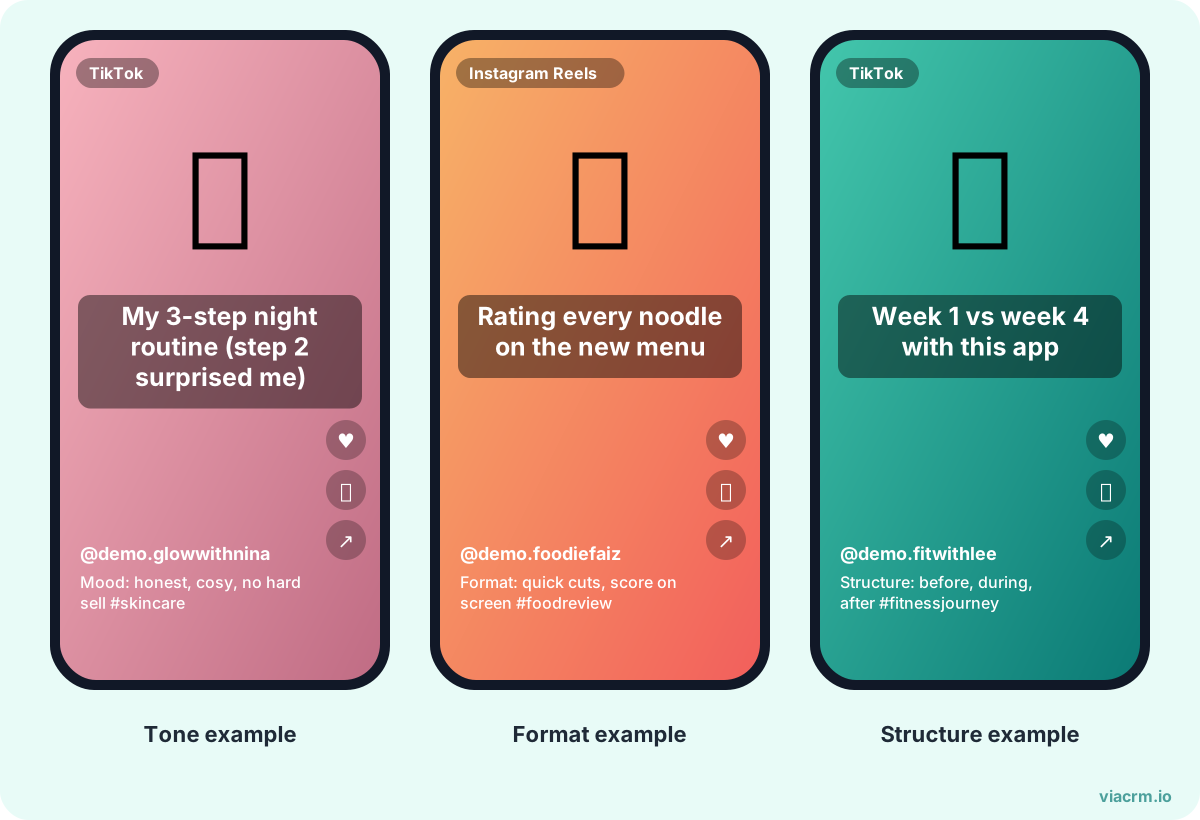
Show the tone, format or structure you want, and let creators make it their own.
Sample content helps creators see the tone, pace and look you have in mind. Two or three examples are plenty.
Say what you like about each one: "the first three seconds", "the way the product is shown".
Mix examples from different creators so no one copies a single style.
Never share another creator's content as something to remake. Use it as a reference only.
When drafts come in, review them against the same brief. Our guide to approving influencer content has a checklist that matches this template.
Where ViaCRM fits
In ViaCRM, the brief is part of the campaign itself, not a PDF lost in a chat. Each campaign holds the objectives, deliverables, draft and posting dates, restricted keywords, terms and disclaimers, and sample content, so creators see the same brief the agency and client agreed on.
When drafts arrive, they're watched and approved inside ViaCRM in two layers, project manager first and then approver (your client), and the AI draft checker flags banned words, spelling and profanity. See features for more.
Frequently asked questions
What should an influencer brief include?
The objective, key messages, exact deliverables, draft and posting dates, do's and don'ts, restricted keywords, required hashtags and disclaimers, how to disclose the paid partnership, sample content, the approval process, usage rights, and the fee and payment terms.
How long should an influencer brief be?
One to two pages. Creators often read briefs on their phones, so keep it short and put the most important rules near the top.
Should I give influencers a script?
Usually not. Give key messages and rules, and let the creator tell it in their own voice, because that's what their audience trusts. Use a script only when exact wording is required, such as a legal disclaimer.
What are restricted keywords in an influencer brief?
Words or names that must not appear in the caption, on screen or in the voiceover, such as competitor names, medical claims for non-medical products or absolute claims. Listing them upfront prevents rejected drafts.
Run your first campaign free
Put your brief, drafts, approvals and payments in one place. Your first campaign for each brand is free.
How to review and approve influencer content: a draft checklist, a two-layer agency and client workflow, turnaround times, and how to give creators feedback.
What to put in an influencer campaign report: the metrics that matter, cost per view and engagement formulas, a template, and how to present it to clients.
How to pay influencers in Malaysia: vendor registration, bank details, payment timing, invoices, foreign creators and FX, and records finance will accept.