If your agents, dealers or outlets post about your products online, those posts can count as your advertising, with your rules and your risks attached. The safest approach is a central brief with mandatory disclaimers and restricted words, a review of every draft before it goes live, and a record of who approved what.
This guide is for property developers, insurers and takaful operators, car brands and franchises with networks of people posting on TikTok, Instagram, Facebook and WhatsApp. It covers the main risks, the Malaysian rules worth knowing about, and a workflow you can put in place. It is general information, not legal advice: confirm the requirements for your business with your legal and compliance team.
Why agent and dealer posts need approval
Agents and dealers are often your most active voices online. They know the product, they know their customers, and they post every day. That's valuable. It also means hundreds of people are describing your products without a marketing or compliance team checking first.
The common problems are rarely deliberate:
Wrong or outdated prices, or a promotion that has already ended.
Unapproved claims, such as guaranteed returns, "best" or "lowest price" in the area, or benefits a policy doesn't actually include.
Missing required details, such as permit numbers, registration numbers or disclaimers.
Copied visuals from another project, brand or competitor.
Customer information visible in screenshots or videos.
In regulated industries, a mistake like this can become a regulatory issue for the company, not just the individual. A short review step before posting is far easier than a takedown, a correction and an explanation afterwards.
Property developers: advertising and sales permit details
In Malaysia, housing developers need an advertising and sales permit from the National Housing Department (JPN) under KPKT before advertising residential projects covered by the housing development laws.
The department's guideline on applying for an advertising and sales permit (in Bahasa Malaysia, updated 20 February 2025) refers to Regulation 6 of the Housing Development (Control and Licensing) Regulations 1989. It lists particulars advertisements should carry, including:
The developer's licence number and its validity period.
The advertising and sales permit number and its validity period.
The developer's name, address, phone number and email.
Land tenure details, and minimum and maximum selling prices for each type of unit.
The same guideline says phrases such as "tertakluk kepada pindaan" (subject to change), "ilustrasi artis" (artist's impression) and "yuran guaman percuma" (free legal fees) are not allowed in any type of advertisement, and nor are statements the developer can't prove, such as a beautiful panoramic view.
These requirements are addressed to developers. But when an appointed agent posts a project on TikTok or Facebook, buyers see it as an advertisement for that project. Many developers therefore give agents approved material with the required details and ask them not to improvise. Buyers can check projects and permits on KPKT's TEDUH portal. Check the current rules with KPKT and your legal adviser.
Estate agents and negotiators: BOVAEP and the REN
Estate agents and real estate negotiators in Malaysia are regulated by the Board of Valuers, Appraisers, Estate Agents and Property Managers (BOVAEP, or LPPEH in Bahasa Malaysia) under the Valuers, Appraisers, Estate Agents and Property Managers Act 1981. Negotiators work under a registered estate agency firm and are issued a REN number and tag.
Industry guidance commonly says listings and ads by negotiators should show the firm's registration details and the negotiator's REN number, and should not be false or misleading. Treat that as a minimum, check the Board's current standards and circulars, and build the required details into every template you give your negotiators.
For developers working with agencies, it helps to agree in writing who approves project content: the developer, the agency, or both.
Insurance and takaful agents: approved advertisements only
Defines digital channels to include social media and instant messaging such as WhatsApp, whether or not the channel is run by the provider.
Requires providers to ensure their intermediaries, which include agents, only use advertisements approved by the provider, and that those ads show the intermediary's registered name and the provider they represent (paragraph 13.2.1).
Says advertisements must be clear and not misleading, and that a product shouldn't be described as "free" or "at no cost" if charges or conditions may apply.
Agent registration also matters. LIAM says only individuals registered with the Life Insurance Association of Malaysia are authorised to promote and distribute life insurance, and the Malaysian Takaful Association says takaful agents must register with MTA through their operator before promoting takaful products.
Insurers and takaful operators usually have their own agent social media rules on top of these. If you're designing an agent content programme, involve compliance from day one, including on whether and how agents may be rewarded for posts.
Car brands, dealers and franchises
Motor dealers and franchise outlets may not have a single sector regulator for social media, but the risks are similar: prices that leave out conditions, expired promotions, unofficial spec sheets, misleading comparisons and logos used in the wrong way.
Most brands handle this through their dealer or franchise agreement and brand guidelines. Spell out which prices, promotions and claims dealers may use, which disclaimers must appear (for example, that prices and promotions are subject to terms), and that content featuring the brand is approved first.
A practical approval workflow
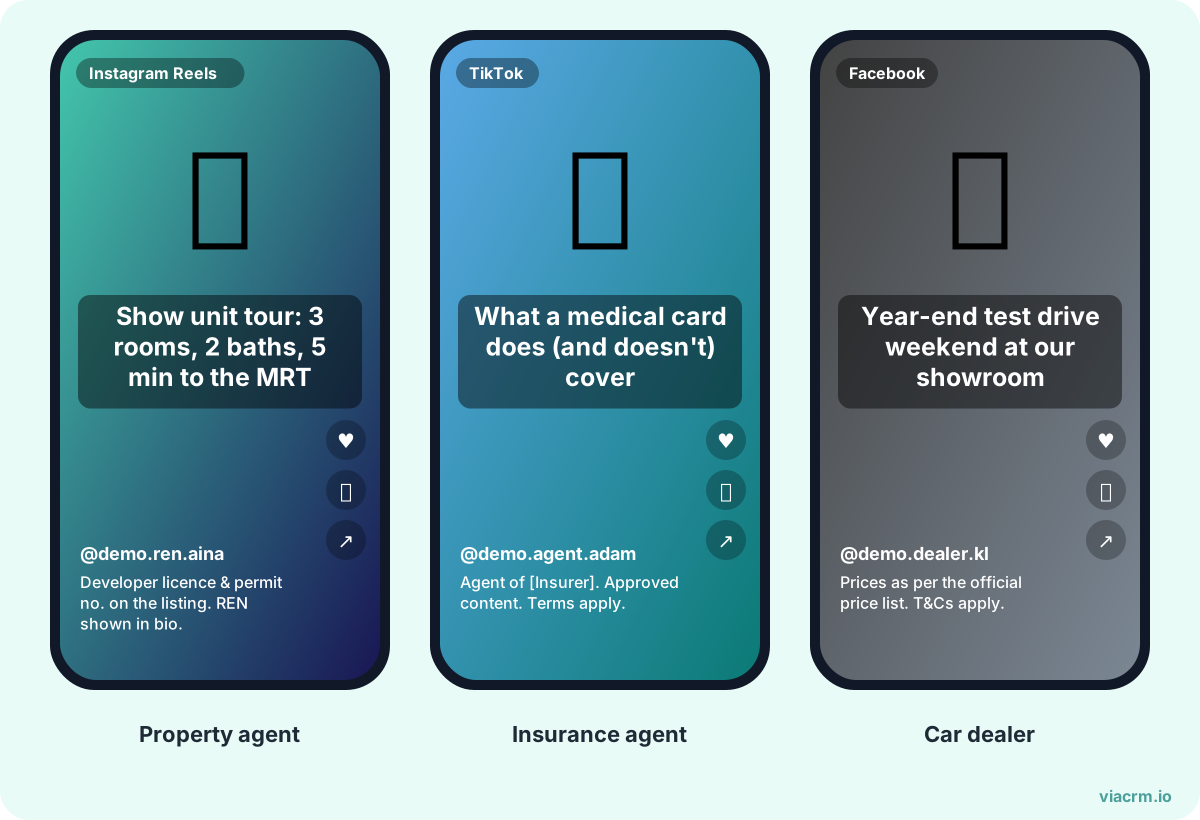
Illustrative only. Every approved post carries the disclaimers your industry needs.
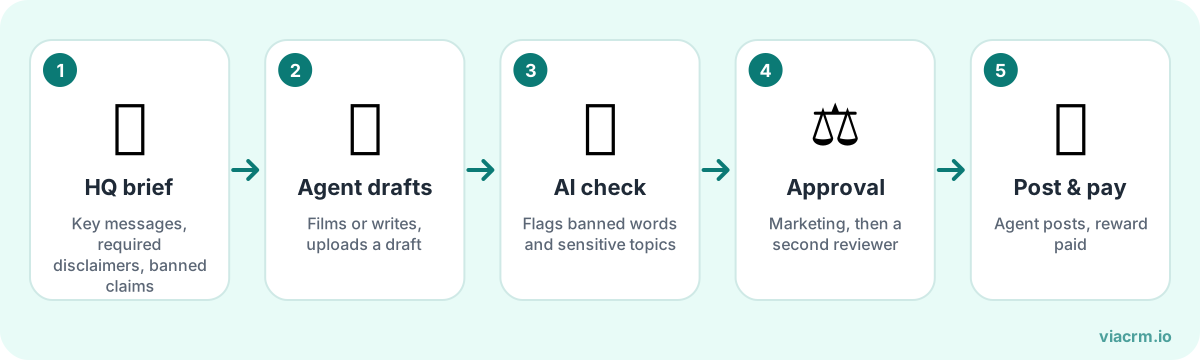
Whatever your industry, the same five steps cover most of the risk:
Send one central brief. Key messages, approved prices and promotions with end dates, mandatory disclaimers and registration details, sample content, and a list of restricted words.
Review every draft before posting. Agents upload their caption and video or image; a reviewer checks it against the brief.
Use two layers where it matters. Marketing checks the message; a second reviewer, such as compliance or the brand team, signs off on regulated details.
Keep a record. Who submitted, who approved, when, and which version went live. If a question comes up months later, you can answer it.
Reward approved posts, not just any post. Paying per approved post makes the review step the route to getting paid, not an obstacle.
Our guide to two-layer content approval goes into the review step in more detail. A restricted words list might start like this, adapted to your products:
Approved figures and wording from the developer's materials
Insurance and takaful
Free, guaranteed payout, no risk, best plan
Approved benefit descriptions with the required disclosures
Motor
Lowest price in Malaysia, final price, unlimited warranty
Official price with terms, warranty as stated by the brand
Every approval is timestamped, so you have a record if anyone asks.
Where ViaCRM fits
ViaCRM was built to run influencer campaigns with briefs, approvals, reports and payments, and the same workflow suits agent, dealer and outlet networks:
Briefs with objectives, deliverables, posting dates, restricted keywords, terms and disclaimers and sample content.
Drafts uploaded and watched inside ViaCRM, with comments and two-layer approval: a project manager reviews first, then an approver signs off. Every approval is timestamped.
An AI draft checker that flags spelling, profanity, religious sensitivities and your banned words before a person reviews. It doesn't replace your compliance review; it makes it faster.
Personal tracking links for each person, so you can see which posts bring in clicks, not just views.
Payouts to agents and dealers: deposit once, release with a click, and ViaCRM pays each person through Airwallex. They aren't charged to withdraw.
Each agent, dealer or outlet counts as one active participant, and users are unlimited. Networks of 150 or more people are on Enterprise, with white-label options, API access and a dedicated contact.
Frequently asked questions
Do property agents' social media posts need the developer's permit number?
KPKT's guideline on advertising and sales permits lists particulars that developer advertisements should carry, including the developer's licence and permit numbers with validity periods. Many developers require appointed agents to use approved material that includes these details. Check the current requirements with KPKT and your legal adviser.
Can insurance agents create their own social media ads in Malaysia?
Bank Negara Malaysia's Policy Document on Product Transparency and Disclosure says insurers and takaful operators must ensure their intermediaries only use advertisements the provider has approved, showing the intermediary's registered name and the provider they represent. Check your company's own agent guidelines.
How do I check if a property negotiator or insurance agent is registered?
Negotiators can be checked with the Board of Valuers, Appraisers, Estate Agents and Property Managers (LPPEH). Life insurance agents can be checked with LIAM, and takaful agents with the Malaysian Takaful Association.
What is a restricted keywords list?
It's a list of words and phrases agents and dealers must not use in posts, such as "guaranteed returns" or "free", with approved alternatives. Include it in every brief and check drafts against it before they go live.
Approve every agent and dealer post
Brief, review and pay your agent, dealer and outlet network in one place with ViaCRM. Tell us about your network on WhatsApp.
A social media policy for employees in Malaysia, with a free template to copy: personal vs official accounts, confidential info, PDPA, approvals and rewards.
How to review and approve influencer content: a draft checklist, a two-layer agency and client workflow, turnaround times, and how to give creators feedback.
How to plan and run an employee advocacy programme in Malaysia: goals and KPIs, roles, a 90-day launch plan, policy, rewards, measurement and partner networks.