An employee advocacy programme is a structured way for your staff to talk about your company on their own social media, with a brief, clear rules, approval and recognition behind them. Done well, it gives your brand content that customers and job seekers trust more than ads, because it comes from real people.
This guide is for HR and marketing managers in Malaysia who want to start an advocacy programme (or program, as many global guides spell it), or rescue one that fizzled out. It covers the two types of advocacy, how it compares with influencer marketing, goals and KPIs, who does what, a 90-day launch plan, why programmes fail, policy, rewards, a monthly scorecard, and how to extend the programme to agents, dealers and outlets, including in regulated industries.
What employee advocacy is (and the two types)
Employee advocacy simply means employees promoting the company they work for: its products, its culture, its job openings, its expertise. A programme turns that from something a few people do on their own into something the company supports.
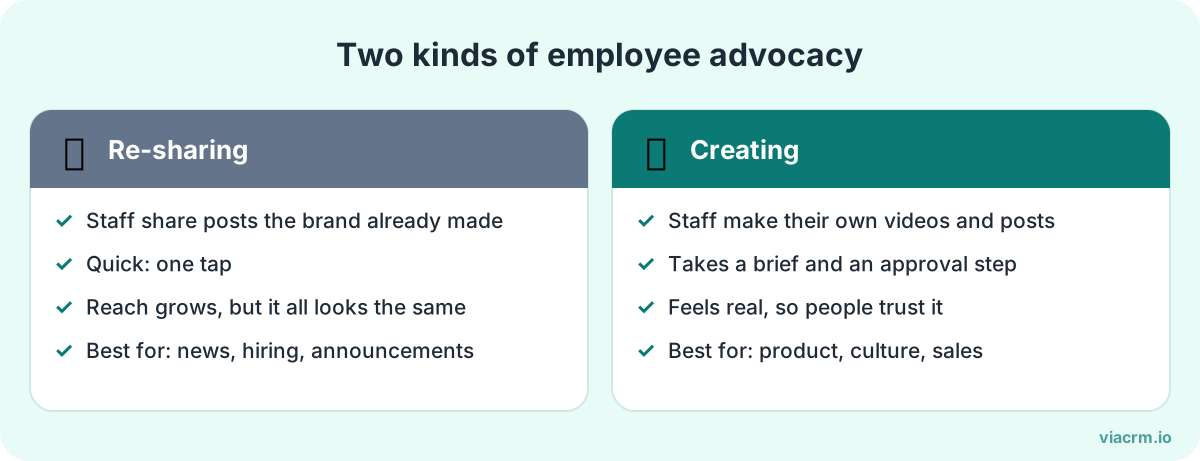
There are two quite different ways to run it, and it's worth deciding early which one you want:
Re-sharing brand posts
Staff creating their own content
What staff do
Share or repost content the company made
Film, photograph or write their own posts from a brief
Effort for staff
Low, a few taps
Higher, a few minutes to an hour
How it feels to followers
Familiar, can look repetitive
Personal and authentic
Main risk
Low engagement
Off-brand or inaccurate posts
What you need
A content library and easy sharing
Briefs, draft approval and recognition
Typical tools
Advocacy platforms with one-tap sharing
Content and approval workflows, such as ViaCRM
To be clear about where we stand: ViaCRM is built for the second type. It handles briefs, drafts, approvals, results and payouts for people creating their own content. If you also want staff re-sharing your brand's posts in one tap, we can switch that on as an add-on. Many companies do a bit of both.
Most programmes start with re-sharing. The trusted content comes from creating.
Employee advocacy vs influencer marketing
Employee advocacy and influencer marketing are often treated as rivals. They're better thought of as two different tools that answer different questions. Influencers bring reach into audiences you don't have yet. Employees bring credibility, because they know the product and the company from the inside.
Employee advocacy
Influencer marketing
Cost model
Mostly time, training and small rewards; no fee per post
A fee per post or package, agreed per creator
Why people trust it
The person works there and knows the product
The creator's audience trusts their taste and honesty
Control
High: you brief, approve and coach your own people
Shared: you brief and approve, but the creator owns the style
Scale
Limited by headcount and how many people opt in
As wide as your budget and your shortlist
Typical audience
Friends, family, industry contacts, local community
The creator's followers, often a defined niche
Best for
Hiring, local trust, product expertise, B2B relationships
Launches, new audiences, reach in a short window
Many companies run both and use the same workflow for each: one brief, one approval process and one report. That's also why a tool built for influencer campaigns can run advocacy well. If you're weighing up software, our guide to influencer campaign management software explains what to look for.
Set goals and KPIs first
"More posts" isn't a goal. Pick one or two outcomes that matter to the business, then choose KPIs that show progress:
Goal
KPIs to track
Brand awareness
Number of approved posts, total views or reach, new followers on the brand account
Hiring (employer branding)
Views on 'life at work' posts, applicants who mention staff posts, career page visits
Sales and enquiries
Enquiries or WhatsApp messages attributed to staff posts, codes or links used
Engagement and culture
Number of active participants, first-time posters, participation by department
Also track programme health: how many people were invited, how many posted at least once, how many posted every month, and how long approvals take. These tell you early if something's broken.
Who does what
Programmes work best with a small, named team. Even in a large company, this is usually two or three people part-time:
Programme owner (HR or marketing). Owns the goals, the calendar and the budget, and reports results to leadership.
Brief writer (marketing). Writes the monthly brief with angles, key messages and dos and don'ts.
Reviewers. Check drafts before they go live. Often a marketing lead first, with a second sign-off from the brand or legal team for regulated topics.
Executive sponsor. A senior leader who posts too, comments on staff posts and talks about the programme in town halls.
Ambassadors. A first group of keen volunteers who post early and show others how. See our guide to starting an employee brand ambassador programme.
A 90-day launch plan
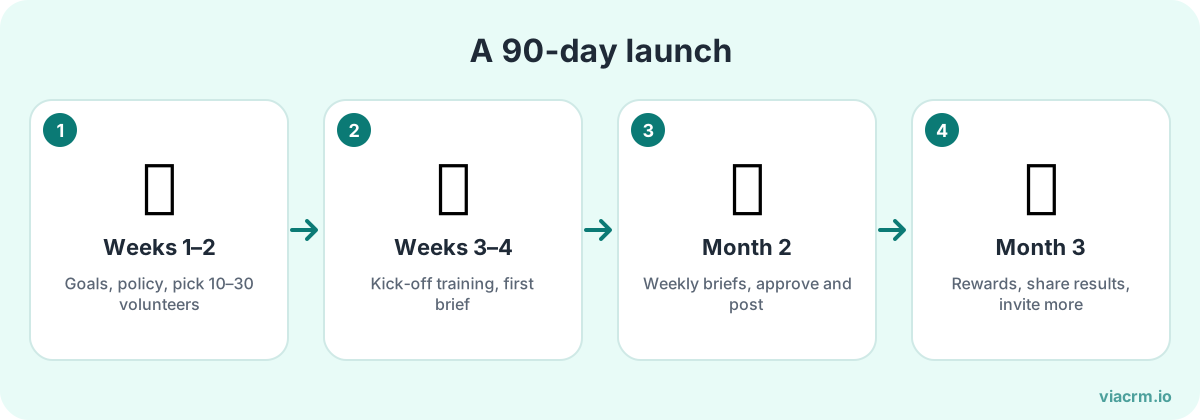
Start with volunteers, then grow from proof.
Start small, prove it works, then grow. Here's a plan you can adapt:
When
What to do
Done when
Weeks 1 to 2
Agree goals and KPIs, name the team, write the social media policy, plan rewards
Leadership has signed off
Weeks 3 to 4
Invite 10 to 30 volunteers, run a 45-minute kick-off with filming tips, send brief one
First drafts are in
Weeks 5 to 8
Approve and publish, recognise every post, send brief two, fix approval bottlenecks
Most volunteers have posted at least once
Weeks 9 to 10
Review results, ask volunteers what helped and what didn't, adjust brief and rewards
A short results summary is shared
Weeks 11 to 13
Open to the wider company with volunteers as examples, send brief three
Second wave has joined
Resist launching to everyone on day one. A small pilot lets you fix the brief, the approval process and the rewards before a bigger group sees them.
Common reasons programmes fail (and how to avoid them)
Most advocacy programmes don't fail loudly. They start with energy, then quietly fade by the third month. The causes are usually the same few, and almost all of them can be fixed:
What goes wrong
What it looks like
How to avoid it
No clear goal
Lots of activity, nothing to show leadership
Pick one or two goals and report against them every month
Briefs that are too vague
"Post something about us" gets few or off-brand posts
Give angles, examples and a sample post with every brief
Slow approvals
Drafts wait a week; people lose interest
Name reviewers, set a turnaround time (say, two working days) and track it
Only the keen few post
The same five faces every month
Reward taking part, not just results, and invite people personally
Recognition stops
Posts go out and nobody says anything
Thank every approved post publicly and share standouts in team channels
Leaders stay silent
Staff wonder if posting is really welcome
Ask a senior sponsor to post, comment and mention the programme
Fear of mistakes
People draft but never publish
Explain the policy, review drafts before they go live, and train on the basics
A quick health check each month catches these early. If participation drops or approval times creep up, fix that before you add more people. For practical ways to get hesitant staff started, see how to encourage employees to post on social media.
Policy, consent and personal data
A short social media policy protects staff as much as the company. Cover what people can share, what's confidential, how to make clear they work for the company, how to handle negative comments, and who to ask when unsure. Our social media policy template gives you a starting draft.
Keep participation voluntary, and get clear permission before reposting a staff member's content on the company's own channels or in ads.
You'll also be holding personal data such as names, phone numbers and social handles. Handle it in line with the Personal Data Protection Act 2010; the Personal Data Protection Department publishes guidance. If in doubt, check with your legal or compliance team.
Rewards and measurement
Recognition keeps a programme alive. Combine quick public thanks with small, fair rewards: something for every approved post and a bonus for the best ones. Rewards to employees are usually treated as income or a benefit, so check with your HR or tax adviser. Our guide on how to reward employees for social media posts has a ready-made structure.
For measurement, collect every post link in one place and measure everyone the same way, over the same period. Report monthly with a few numbers and two or three standout posts. Leaders remember examples more than charts.
Measuring ROI: a simple monthly scorecard
Return on investment for advocacy is part numbers, part judgement. You won't get a perfect figure, but a one-page scorecard each month shows whether the programme is earning its keep. Compare what you put in (staff time, rewards, tools) with what came out (reach, applicants, enquiries).
The targets below are examples only, to show the format. Set your own based on your team size and your first two months of results.
Metric
How to measure
Example target
Active participants
People with at least one approved post this month
60% of those invited
Approved posts
Count of posts that passed review and went live
2 per active person
Approval turnaround
Average days from draft upload to approval
2 working days or fewer
Views or reach
Total from post links, measured the same way for everyone
Up on last month
Clicks
Clicks on personal tracking links or tagged links
Up on last month
Enquiries or applicants
WhatsApp messages, forms or applications that mention a staff post
Agreed with sales or HR
Cost per view
Rewards and tool costs divided by total views
Lower than your paid social benchmark
Standout posts
Two or three posts worth showing leadership
At least two
Cost per view is the easiest single number to compare with ads and influencer spend. Track it over several months rather than judging one month on its own. Our guide to writing a campaign report covers how to present results that people actually read.
Extending to agents, dealers and outlets
Many Malaysian businesses sell through people who aren't on the payroll: property negotiators, insurance and takaful agents, car dealers, franchisees, outlet staff. The same programme works for them, often even better, because they're used to promoting what they sell.
Two things change. First, approval matters more: agents in regulated industries such as property and insurance have advertising rules to follow, so reviewing content before it's posted is essential. See our guide to content approval for property agents, insurance agents and dealers. Second, paying per approved post or per result is often simpler for outside partners than for employees.
Employee advocacy for regulated industries
Property, insurance and takaful, financial services and healthcare can all benefit from advocacy, because buyers in these sectors want to hear from a real person they can trust. They also carry more risk. A well-meant post can still mention a price, a return or a promise that the rules don't allow.
The details depend on your industry, your licence and your regulator, so this isn't legal advice. Check the current requirements with your compliance team, your licensing or regulatory body, and your industry association. In general, programmes in these sectors tend to work best when they:
Write the rules into the brief. List required disclaimers, licence or registration details, and words that must not be used.
Approve every post before it goes live. No exceptions for senior staff or top performers.
Use two layers of review. A marketing lead checks the message, then a second reviewer from compliance or legal signs off.
Keep a record. Save each approved version and the date it was approved, in case questions come up later.
Supply approved material. Give people approved project details, product facts and visuals so they don't invent their own.
ViaCRM was built to run influencer campaigns, and the same workflow runs creator-style advocacy for employees, agents, dealers and outlets. You send one brief with deliverables, posting dates, restricted keywords, required disclaimers and sample content. People upload drafts; your project manager reviews, comments and approves first, then an approver can give the final sign-off, with every approval timestamped. An AI checker flags spelling, captions, profanity, religious sensitivities and banned words before a human looks.
Instagram and TikTok results update automatically each week, with Facebook and RED entered manually, so reporting lives in one place and cost per view is worked out for you. Each person can also have a personal tracking link, so you can see which posts bring in clicks. For agents, dealers and partners, you can deposit once and release payments with a click; ViaCRM pays each person through Airwallex.
If you also want staff re-sharing your brand's own posts, we can switch on one-tap re-sharing as an add-on. Every plan has unlimited users and each person counts as one active participant. Networks of more than 150 people suit Enterprise; see how it works on our employee advocacy page. Why just hire influencers? Your employees and agents can be advocates too.
Frequently asked questions
What is an employee advocacy programme?
It's a structured way for staff to promote their company on their own social media, supported by briefs, a social media policy, approval and recognition. It can focus on re-sharing brand posts, on staff creating their own content, or both.
How do you measure employee advocacy?
Choose KPIs linked to your goal: reach and views for awareness, applicants for hiring, enquiries for sales. Also track participation, such as how many people post each month. Collect every post link in one place and measure everyone the same way.
How long does it take to launch an employee advocacy programme?
A small pilot can start within a month: two weeks to agree goals, policy and rewards, then a first brief to 10 to 30 volunteers. Plan around 90 days before opening it to the whole company.
What are examples of employee advocacy?
Common examples include a sales executive filming a short product demo on TikTok, an engineer writing a LinkedIn post about a project they're proud of, outlet staff sharing a behind-the-scenes Instagram story, and HR teams asking staff to post 'day in the life' videos for hiring. Property and insurance agents sharing approved project or product content is another example, extended to partners.
How many employees should be in an advocacy programme?
Start with a pilot of 10 to 30 volunteers, enough to test your brief, approvals and rewards without overloading reviewers. Grow in waves once the pilot is running smoothly. There's no ideal final size; what matters is how many people post regularly, not how many signed up.
Is ViaCRM an employee advocacy platform?
ViaCRM is influencer campaign management software that also runs programmes where employees, agents and dealers create their own content: briefs, draft approval, results and payouts. If you also want staff re-sharing brand posts in one tap, we can switch that on as an add-on.
Running a programme for 150+ people?
Tell us about your employees, agents or dealers on WhatsApp and we'll show you how ViaCRM handles briefs, approvals and results.
How to encourage employees to post on social media: why staff hold back, a 7-step plan that makes posting safe and easy, content ideas, and mistakes to avoid.
How to start an employee brand ambassador programme: picking volunteers, training, a monthly brief rhythm, recognition, a simple charter and keeping it going.
Ideas to reward employees for posting about your company on social media: what to reward, what to give, how to keep it fair and run it without spreadsheets.